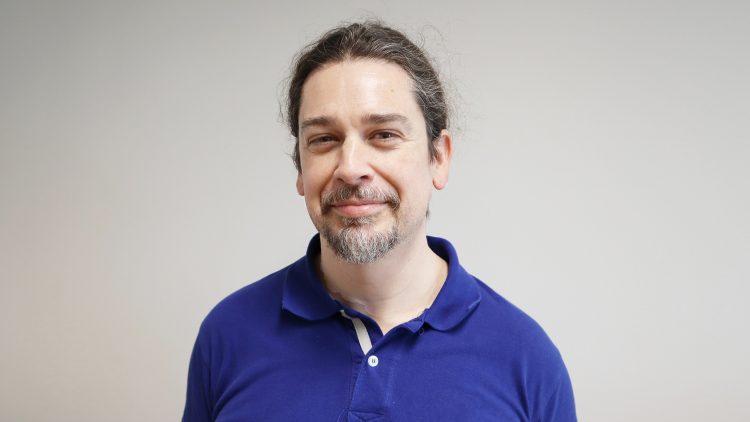
The project “Mais Dados, Melhor Saúde” (“More Data, Better Health”), coordinated by Eduardo Costa, a professor at Técnico, was presented on December 12 at Culturgest in Lisbon. Dozens of experts gathered in an initiative aimed at sharing recommendations for better use of health data to assess the impact of public policies and reduce system costs.
Eduardo Costa explains that the project aims to support the design and implementation of a model for secondary health data access in Portugal. The ultimate goal of the project is to create a strategic document and publicly present conclusions that will enable Portugal to build “an effective, secure secondary use of health data in line with European priorities, transforming the current digital base into knowledge of public value.”
The Técnico professor argues that “Portugal is not starting from scratch”, given that it already has “a good technological foundation”, referring to the Shared Services of the Ministry of Health (SPMS), which acts as a digital agency for health and allows the cross-referencing of user data in different databases. The professor highlighted the importance of bringing “the 39 Local Health Units (ULS) together on a single portal” in order to facilitate requests for access to data, and reinforced the need for transparency in the use of patient data. “It is important to ensure transparency and security in its use”.
The morning session, moderated by Carlos Daniel, a journalist from RTP, was attended by Tânia Ramos, President of CEGIST, Mário Martins, General Manager at IQVIA, and André Vasconcelos, General Manager at Roche.
Eric Sutherland, a Health Economist at the Organisation for Economic Cooperation and Development (OECD), delivered a presentation titled “Health Data Today, AI Tomorrow”. In his talk, he shared the ongoing work in Europe and at the OECD. He stated that “every country thinks it is behind the others” but emphasized that “discussions with other countries help to find solutions”. According to Eric, artificial intelligence is currently the “big thing”, and he remarked that “we have to know how to use these tools in conjunction with data”. He also pointed out that “30% of the world’s data is health data.”
Nuno Costa, an Executive Member of SPMS, spoke about Health Digitisation in Portugal. He described artificial intelligence as “a tool that can help professionals” and emphasised Portugal’s progress in developing pioneering data platforms, the processing of this data, and the effective communication between them.
There was also a debate with Francisca Vargas Lopes, President of the Portuguese Association for Health Economics (APES), Maria de Belém Roseira, Lawyer and Former Minister of Health, Paulo Gonçalves, President of RD-Portugal (Portugal’s Union for Rare Disease Associations), and André Peralta Santos, Deputy Director-General of Health. The session was closed by the Minister of Health, Ana Paula Martins, who reinforced the importance of combining digitisation with data and its platforms.